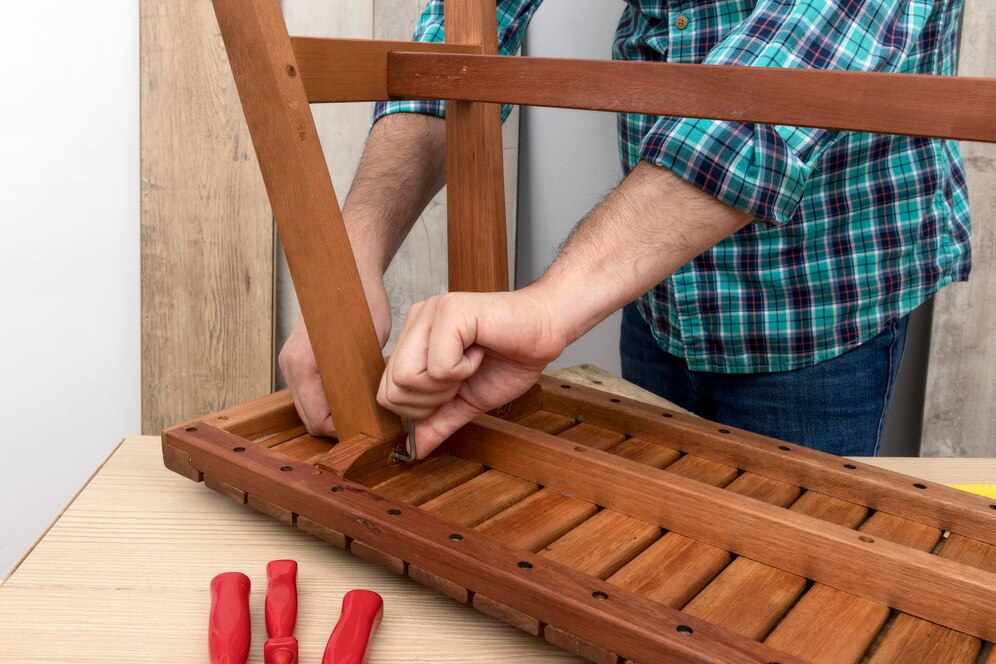
Placement of strengthening elements for the old furniture
Placement of Strengthening Elements for Old Furniture
Older furniture often has the best materials, the best proportions, and the most character. What it may lack after years of use is structural strength. Joints loosen, legs start to wobble, backs flex, and drawer frames spread. Our service focuses on placing discreet strengthening elements to restore stability without changing the look and feel you love.
Reinforcement is not a quick patch. It is a careful process of assessing weak points, selecting compatible materials, and installing supports that work with the original construction. Whether your piece is solid wood, veneer, laminate, or chipboard, we reinforce it in a way that improves load bearing, reduces movement, and extends its life.
When Reinforcement Is the Right Solution
Some furniture problems can be solved with tightening screws or re gluing a joint. Others need additional structural support because the original fixings have fatigued or the design was never meant for today’s use. Reinforcement is ideal when you want to keep the piece, avoid replacement costs, and make it safe for daily use.
- Wobbling tables and desks where the apron joints no longer hold firmly
- Chairs and stools that creak, rack sideways, or feel unstable under weight
- Cabinets and wardrobes with flexing backs, sagging shelves, or doors that drift out of alignment
- Sofas and bed frames with movement in the base structure or weakened corner blocks
- Drawers that pull the carcass out of square or stress the runners
If you are also planning assembly, upgrades, or reconfiguration, we can combine reinforcement with broader furniture repair services so everything works as one solid unit.
Our Reinforcement Approach
1. Assessment and planning
We begin by checking how the piece is built and where it is failing. We look for loose joints, split timber, blown out screw holes, missing corner blocks, warped panels, and stress points that will continue to move even after tightening. We also confirm how the furniture is used, for example heavy dining use, children’s rooms, or office storage, so the reinforcement matches the real load.
2. Choosing the right strengthening elements
Different problems require different reinforcements. We select elements that add rigidity without creating new weak spots. Common solutions include corner blocks, gussets, cleats, braces, backing panels, steel angle brackets, threaded inserts, dowels, and internal battens. Where appearance matters, we keep reinforcements hidden inside frames, behind backs, under tops, or beneath upholstery lines.
3. Precise placement and installation
Placement is what makes reinforcement effective. We install supports where the forces actually travel, such as at racking corners, around hinge areas, along shelf spans, and near leg joints. We also avoid over stiffening one area in a way that forces stress into another. Fixings are chosen for the material, with careful pilot drilling and the correct screw type and length. Where gluing is needed, we use suitable adhesives and clamp techniques to keep parts square while curing.
4. Finishing and functional checks
After reinforcement, we test stability, level the piece, and verify that doors, drawers, and moving parts operate smoothly. If needed, we align hinges, adjust runners, and ensure the furniture sits flat on the floor. If the work is part of a larger project, we can coordinate with professional furniture repair tasks like handle replacement, door alignment, or drawer repairs so the result feels fully restored.
Reinforcement Options by Furniture Type
Tables and desks
We address wobble by stabilizing leg to frame joints, adding corner blocks, and strengthening aprons. For desks, we may reinforce under top panels to reduce flex and improve long term screw retention.
Chairs
Chair reinforcement often involves re setting loose joints, adding hidden blocks where appropriate, and restoring correct geometry so the chair does not rack. We aim for strength without bulk, keeping the chair comfortable and visually unchanged.
Wardrobes, cabinets, and shelving
Large case goods benefit from back panel reinforcement, internal bracing, and improved fixing points around hinges and shelf supports. We can also square up frames to help doors close properly and shelves sit evenly. For combined work that includes reassembly after moving, our furniture disassembly and reassembly support helps prevent new stresses during relocation.
Beds and sofas
For bed frames, we reinforce corners, center supports, and slats or platforms to prevent movement and noise. For sofas, we strengthen internal frames, especially at high load corners and seat support areas, while maintaining comfort and upholstery integrity.
What to Expect During Your Service Visit
- Inspection of joints, panels, fixings, and movement under light load
- Clear recommendations on what will be reinforced and how it will be hidden or finished
- On site reinforcement using appropriate tools, fixings, and protection for floors and surfaces
- Final checks for stability, alignment, and safe daily use
Our goal is to keep the character of your old furniture while making it dependable again, so you can use it with confidence for years to come.
FAQ
Can you reinforce furniture without changing how it looks?
Yes. We place strengthening elements inside frames, under tops, or behind panels whenever possible. We choose fixings and supports that improve rigidity while keeping visible surfaces and lines intact.
What types of furniture can be reinforced?
Most items can be strengthened, including chairs, tables, wardrobes, cabinets, beds, and sofas. We tailor the reinforcement to the material and construction, whether it is solid wood, veneer, laminate, or chipboard.
Will reinforcement stop creaking and wobbling completely?
In many cases, yes, especially when movement is caused by loose joints or racking frames. If materials are cracked or severely worn, we may recommend a combination of repairs and reinforcement to achieve the best result.